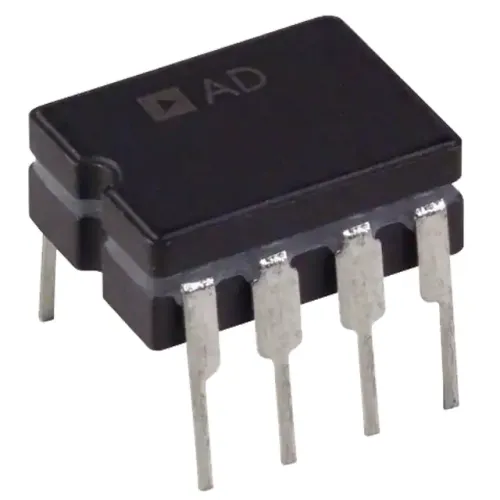
Introduction: The AD620SQ/883B instrumentation amplifier offers 500pA input bias current and 18mA output current in an 8-CERDIP package, ensuring precise, stable signal amplification for demanding engineering applications.
In many precision engineering workflows, subtle inefficiencies in signal processing can bottleneck entire system performances. Engineers often find that the challenge lies not just in measurement accuracy but also in the stability and reliability of the components they select. Integrated circuits from a trusted integrated circuits manufacturer play a critical role here, especially instrumentation amplifiers like the AD620SQ/883B. These devices seamlessly integrate into setups requiring minute signal amplification with low noise, bridging the gap between raw sensor output and refined data interpretation. For anyone sourcing components, an instrumentation amplifier supplier offering quality and detailed specifications ensures such workflows operate with minimal compromise.
Achieving Signal Integrity with Low Input Bias Current Instrumentation Amplifiers
Signal integrity remains a cornerstone in precision engineering, and the use of instrumentation amplifiers featuring extremely low input bias currents is pivotal. The AD620SQ/883B, for example, boasts an input bias current of only 500 picoamperes, which helps minimize the effects of leakage currents that can distort delicate sensor readings. Such low input bias current ensures that the original signal remains virtually untouched, preserving data fidelity from source to output. For industries relying on this precision, selecting the right components from an instrumentation amplifier supplier means access to reliable devices that maintain signal clarity even under challenging conditions. Integrated circuits manufacturers who focus on these detailed electrical characteristics provide engineers with tools that enhance design resilience and measurement accuracy, essential for medical instrumentation, process controls, and research applications.
Influence of Package Type on Thermal and Mechanical Performance of Electronics Components
The physical packaging of integrated circuits directly affects both their thermal management and mechanical stability, influencing the overall durability and performance of electronic systems. The AD620SQ/883B utilizes an 8-CERDIP package, a robust choice for through-hole mounting that offers excellent heat dissipation and protection against mechanical stresses. This packaging type complements the IC’s ability to operate over broad temperature ranges, from minus 55 to 125 degrees Celsius, making it suitable for environments where thermal fluctuations are common. Engineers sourcing from an integrated circuits manufacturer aware of these packaging nuances can optimize system longevity and reliability. Furthermore, an instrumentation amplifier supplier experienced with such packages can advise on integration methods that minimize thermal mismatch and stress, critical in demanding industrial or scientific instruments where component longevity is as vital as precision.
Considerations for Output Current Handling in Industrial Integrated Circuits
In applications where precise current drive is essential, the output current capability of integrated circuits must align with system demands to ensure consistent performance. The AD620SQ/883B supports an output current of up to 18 milliamperes per channel, allowing it to directly drive various loads without external buffering circuits. This attribute simplifies system design by reducing component count and power consumption, which is highly valued in industrial control systems and instrumentation setups. Choosing components from an instrumentation amplifier supplier familiar with these operational requirements ensures compatibility in complex workflows. Integrated circuits manufacturers that provide detailed current-handling specifications enable designers to build equipment that not only meets precision requirements but also performs reliably under fluctuating electrical loads. This is essential in maintaining stable output signals, reducing noise, and enhancing overall system efficiency across diverse engineering fields.
In reviewing how integrated circuits like the AD620SQ/883B contribute to precision engineering efforts, it becomes clear that sourcing from a knowledgeable instrumentation amplifier supplier or integrated circuits manufacturer carries substantial benefits. Components designed with low input bias currents, thoughtful packaging for thermal stability, and robust output current capabilities offer dependable performance that engineers can count on. The right design choices also foster smoother workflows and improved longevity in critical applications. As technology advances and precision demands deepen, the adaptability and reliability of these integrated circuits will continue to support evolving engineering challenges with confidence and integrity.
References
AD620SQ/883B – Integrated Circuit – Analog Devices
AD620SQ/883B by Analog Devices Inc – Findchips Blog
AD620SQ/883B – Q&A – Instrumentation Amplifiers – EngineerZone
AD620SQ/883B Instrumentation Amplifier – Detailed specifications and features of the AD620SQ/883B instrumentation amplifier.
Comments
Post a Comment